
She studied economics and created the Uber of food sales
María Fernanda Bonesso grew up among the fruit, almond and olive trees her father grew in Maipú, Mendoza. "On weekends, my siblings and I had to go planting, harvesting, buying supplies. As a girl, people…
Published in Ohlalá on March 10, 2024
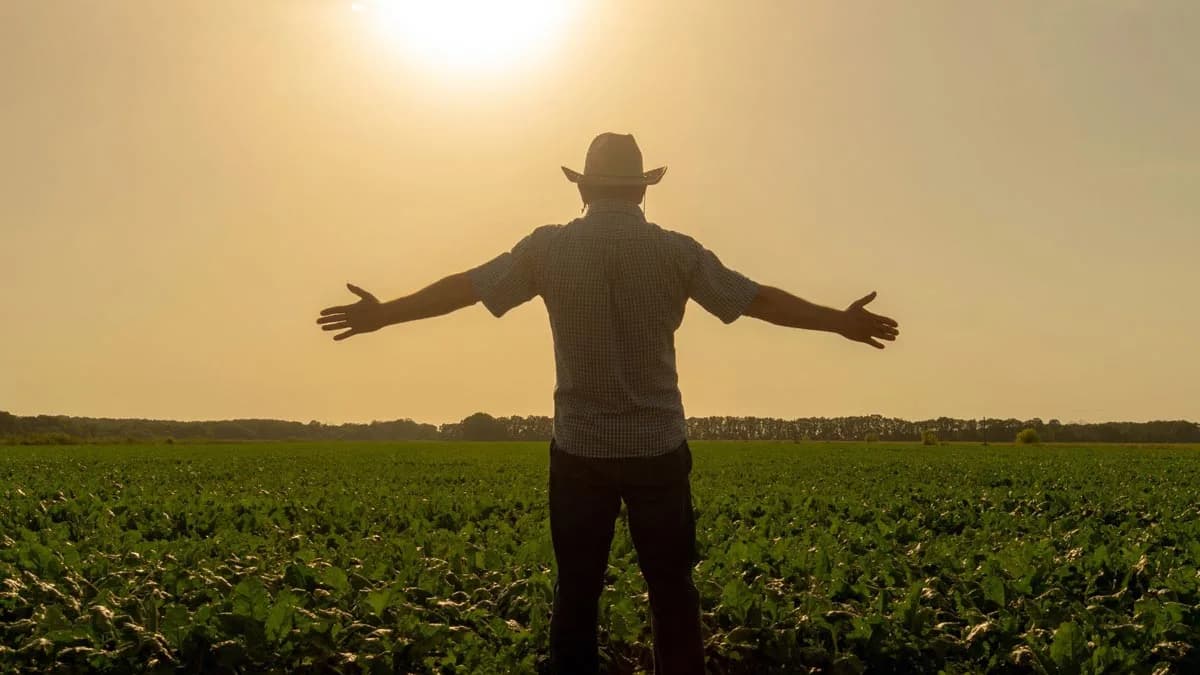
María Fernanda Bonesso grew up among the fruit, almond and olive trees her father grew in Maipú, Mendoza. “On weekends, my siblings and I had to go planting, harvesting, buying supplies. As a girl, people would ask me when tomato season was, and of course I knew,” she recalls. Her mother worked at a bank and her father was a farmer, and something about those different realities always led her to wonder how she could innovate in the sector.
Seeing her father struggle to sell his products was another thing that troubled her. Every November, the apricots had to be sold. “My dad has a few hectares; he doesn't set the price of apricots or supply the market, he's just one among many. So his voice gets diluted, lost among thousands of other producers in the same situation. Back then I didn't understand why it wasn't valued and why it was so hard to find these markets,” she says. Wanting to take on challenges and find a solution, María Fernanda decided to study Economics. Even though that meant moving away from the farm.
Leaving the countryside
The hardships she saw year after year in the family business made her not want to follow that path. “Later on I asked myself many times why, if we enjoyed going to the farm and spending time with people, we pushed ourselves away, as if intuitively we didn't see ourselves there,” she wonders. She graduated as an economist from the University of Cuyo and then won a scholarship to study in Spain.
Years later, while she was doing a master's degree in Buenos Aires, a family phone call brought her back in touch with the world of agriculture. “It was 2017, and the platform economy, with companies like Uber, was just getting started. At that moment I was studying in the library and had more or less decided to move back to Mendoza, but I was really afraid of what kind of professional life I'd have. My mom called me in despair to say she had stopped the harvest, because what they were going to be paid wasn't even enough to pay the workers. The harvest was half done, with thousands of kilos thrown away. I thought about my dad's effort over a whole year and so many needs. That couldn't happen,” she recounts.
The new business models driven by digital platforms gave her an idea. With so much technological progress, it made no sense that none of it reached small producers and that harvests ended up being thrown away. That's how the idea of humanizing the intermediation between producers and consumers was born. But breaking with the traditional chain was no easy task, and it took two years of work to create the first prototypes.
María Fernanda Bonesso was recognized by the UN for creating Agrojusto.
Connecting small producers
“Talking about technology and food made you sound crazy. Producers didn't want technology, but they weren't thinking about the next generations. My dad was always determined not to give up farming, even if he made a loss year after year. But if he sold the land — as others did, because it's worth more as real estate than as a farm — what would happen to that food? What will happen if we all do this? What are we going to eat in 20 years?” Fernanda asks.
Seeking to help small producers and to offer some glimmer of a solution to the global food crisis, Fernanda created Agrojusto. They started with a pilot, together with a cooperative of small farmers, on an e-commerce site. “It was revolutionary at the time, and people in Mendoza really embraced it. People wanted to buy from us in person and we'd explain that everything was digital; they wanted to see the product, but that wasn't possible,” she notes. The following year, with the mandatory lockdown due to the pandemic, having all their processes digitalized allowed them to grow stronger and expand.
Agrojusto's goal is to build a fairer, more efficient food market through the development of technology solutions for the food and family farming sector. Today, 12 professionals work on the platform, and more than 100 food producers from across the country (Misiones, Jujuy, Río Negro and Mendoza, among other provinces) take part, along with more than 340 retailers who interact and buy online. They also provide digital training to farmers so they know how to find their way around the website. “Here I was able to channel all the drive I had and also motivate lots of people to do the same, so it's one of the greatest satisfactions I've had,” she says.
Agrojusto helps connect food producers from across the country.
Food innovation
The company's breakthrough was understanding that it isn't just about the producer, but about the whole chain. The producer isn't isolated, because they have to sell into a system. “That's when we understood we had to include the other players and start creating efficiency, because the romantic idea of the producer selling directly to the market and to families isn't going to happen; it's impossible, at least for now. We need to find players who see the producer as an ally, not as a supplier of inputs,” she explains. So Agrojusto set out to be the ally that connects, the technology partners bringing efficiency to a chain that was still selling food the way it did 100 years ago.
In 2021, the UN named Agrojusto one of the 50 most inspiring small businesses in the world for their potential to revolutionize food systems. They were the only Argentine startup, and the event, attended by global companies and leaders, strengthened Fernanda's conviction that she was on the right track. “For us it was one more grain of sand. There were lots of players who understood the same thing we did, from cooperatives to private entrepreneurs, who don't have the structure but do have the concept of cooperation. If things go well for me, they have to go well for you too, reciprocally. We stopped talking about intermediaries and started thinking about market managers. Today I can proudly tell my dad: ‘Don't worry, I've got someone who wants your apricots.’”